The Haunting of a Top 5 Bank

In the eerie corners of digital onboarding, not all visitors are who they claim to be. Fraudsters’ disguises aren’t just for Halloween; they present a year-round nightmare for businesses.
For a top 5 bank, an influx of risky visitors proved to be more than a scary story. Sophisticated attackers were infiltrating their systems, slipping past identity checks and manual reviews like ghosts through walls. What followed was a chilling rise in fraud, mounting operational costs, and a growing urgency to unmask the intruders before they could do more damage.
Shape-Shifting Fraud Threats
Fraudsters’ book of tricks is always growing. New tools and tactics allow them to bypass fraud solutions and swipe as many treats as possible before getting caught. Their constant evolution keeps fraud leaders up and night and scares away concerned consumers.
For this bank, their size and traffic volume made it a prime target for state-of-the-art attacks. Fraudsters were eager to break out their latest and greatest disguises and attack strategies, leaving the bank’s fraud team constantly responding to fraudsters’ newest tricks.
The consequences mounted quickly. Identity verification costs rose due to the high volume of risky applications. Fraudulent accounts were being erroneously approved, despite robust fraud tools and manual reviews. By the time the bank could respond to one attack, a new one was already at its doorstep.
NeuroID Sorts the Sweet from the Suspicious
The bank knew they had to crash fraudsters’ party, but how? Adding a series of friction-filled checks for users would turn people away like a haunted house. But failing to protect its onboarding flow — leaving a bowl of candy on the porch, per se — would invite opportunistic fraudsters to continue targeting their business.
They turned to NeuroID to find the right balance. With a new layer of behavioral visibility, the bank was able to spot fraud that their other tools missed, detecting more risky users before applications were even submitted.
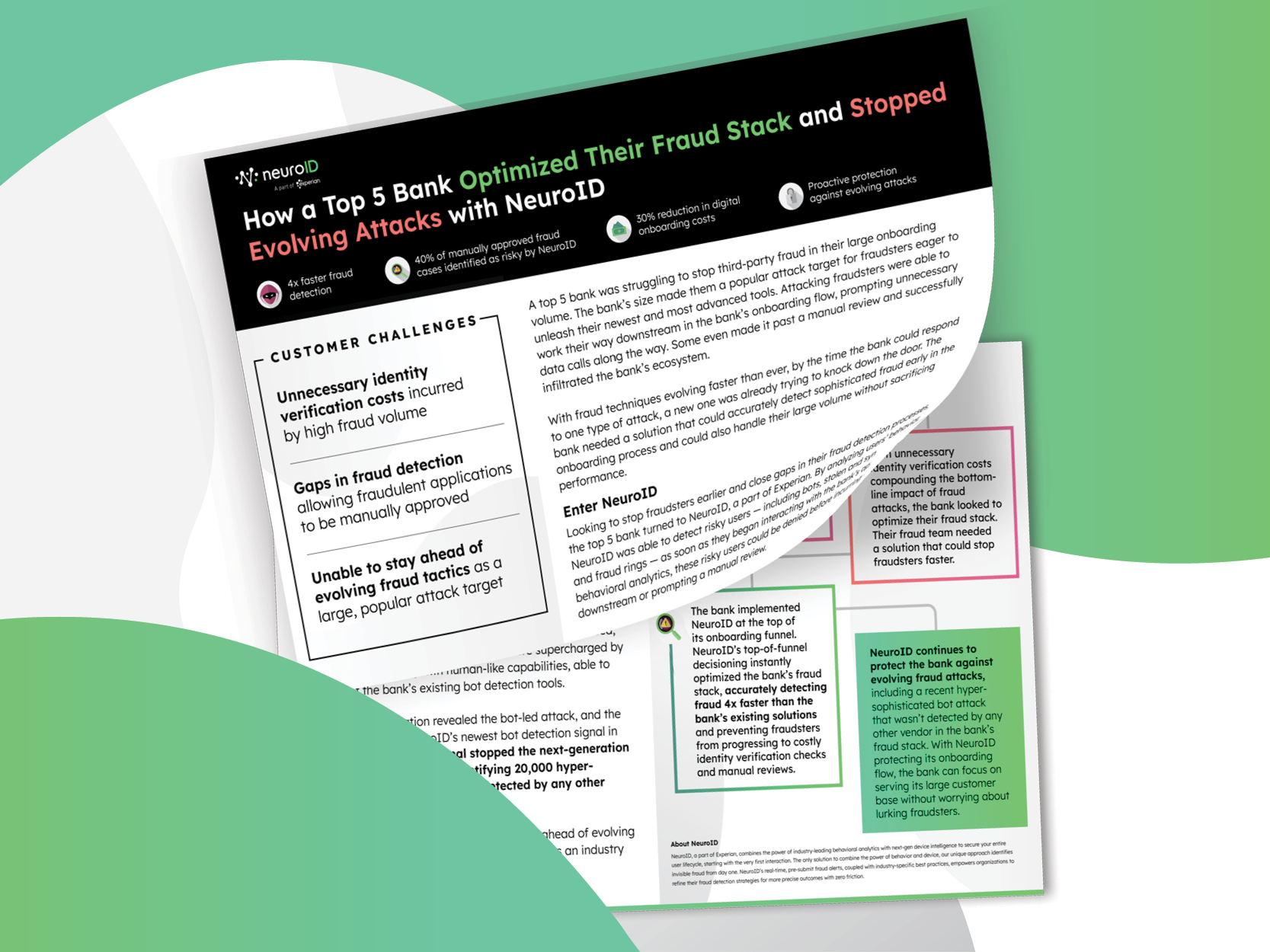
With NeuroID as its first line of defense against evolving attacks, the bank detected fraud four times faster than their previous systems. Their fraud team also uncovered that a significant portion of fraud cases identified by NeuroID — 40% — were previously approved manually. With NeuroID in place, the bank saw a major reduction in digital onboarding costs, cutting expenses by 30% thanks to fewer unnecessary identity checks and manual interventions.
The Rise of Masquerading Machines
Months after implementing NeuroID, the bank faced a new wave of risky trick-or-treaters: advanced, GenAI-powered bots. These bots costumed themselves as legitimate humans, cycling through device and network data and mimicking human behavior so convincingly that they bypassed every other detection tool in the bank’s fraud stack.
NeuroID’s latest bot detection signal, however, was able to identify and stop 20,000 of these hyper-sophisticated bots in real time, protecting the bank from a major attack that could have caused operational chaos and significant losses. NeuroID’s proactive detection continues to protect the bank from new attack types, giving them a critical edge over fast-advancing fraudsters.
Be Ready for Fraudsters’ Jump Scares
While the monsters of modern fraud may still roam the digital landscape, this bank has found a way to keep them at bay. Using NeuroID at the top of its onboarding funnel, the bank has transformed its fraud strategy from reactive to proactive. It can detect threats before they escalate, reduce operational costs, and maintain trust with its customers — all without adding friction to the user experience.
For the full story of the bank’s behavior-based fraud prevention transformation, read the complete case study.