
The Automated Majority: Bots Now Make Up Over Half of Internet Traffic

Over the past few weeks, one headline has grabbed the attention of leaders across the digital world: bots now account for more than half of all internet traffic.
For the first time, bots are now more prevalent than humans. A recent report from Fortune credits AI, confirming what many fraud prevention experts have long feared: bots are simultaneously growing more sophisticated and more common.
While not all bots are harmful, the rise of malicious ones is particularly alarming. One in five bots is a “bad bot”, and our data reveals bots are now responsible for 80% of fraud attacks, up from 30% at the start of 2024.
AI is the driving force behind today’s advanced bots, but how far back do fraud leaders have to go to truly find the source of the bot surge — and is there a way to stop it?
How Did We Get Here?
Financial institutions are well aware of the impact of bots. A single fraudulent account opening or account takeover can incur significant losses. Given the scale of bot attacks, the consequences of subpar bot detection snowball fast. That’s why most banks and credit unions have invested in bot detection tools (though the efficacy of traditional solutions is threatened by AI-powered, next-generation bots).
But other industries — fintechs, social media, and ecommerce, to name a few — have taken a different approach. Many are reducing fraud checks and requiring less information to open accounts or transact. The goal is to minimize friction and get new users through the door faster.
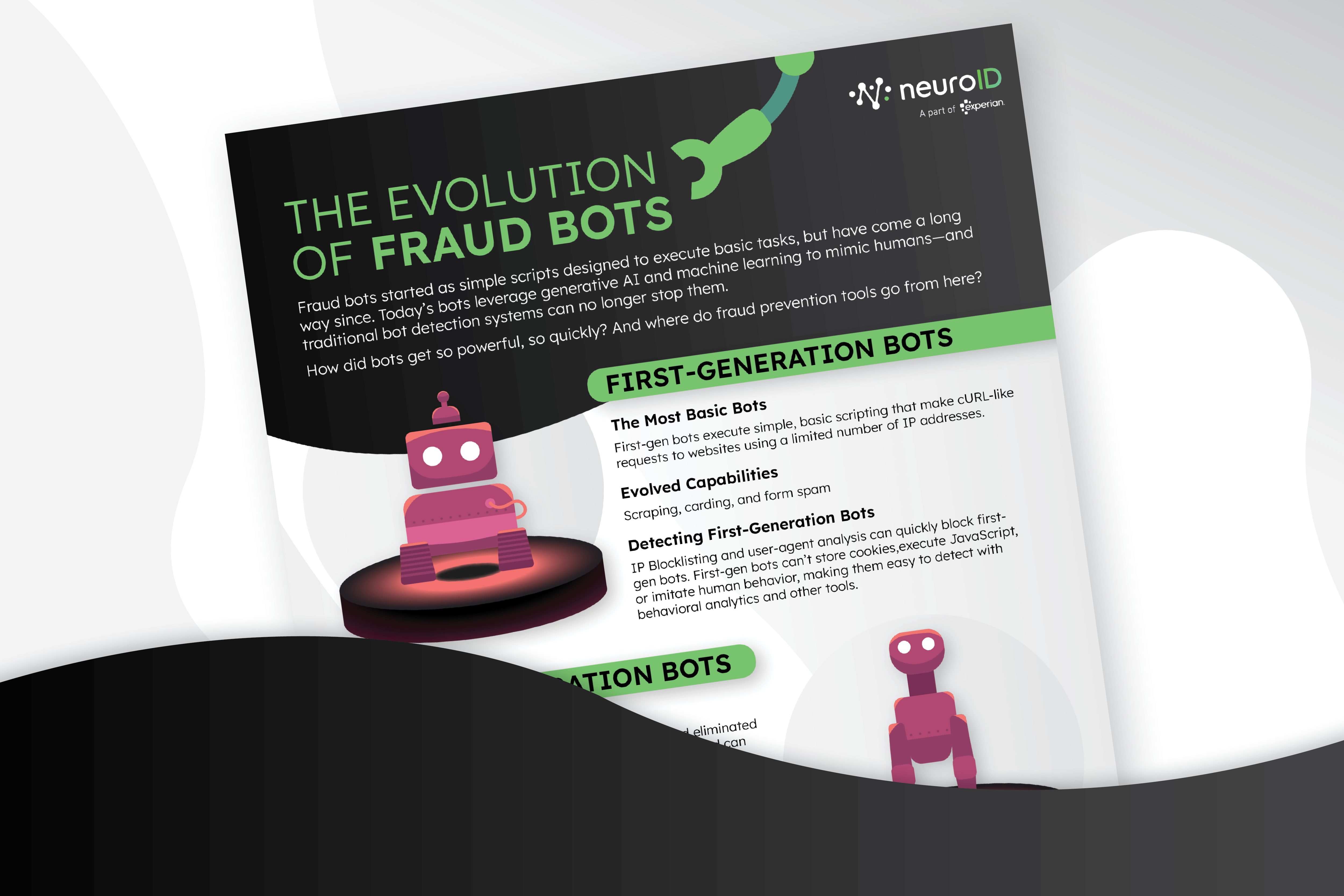
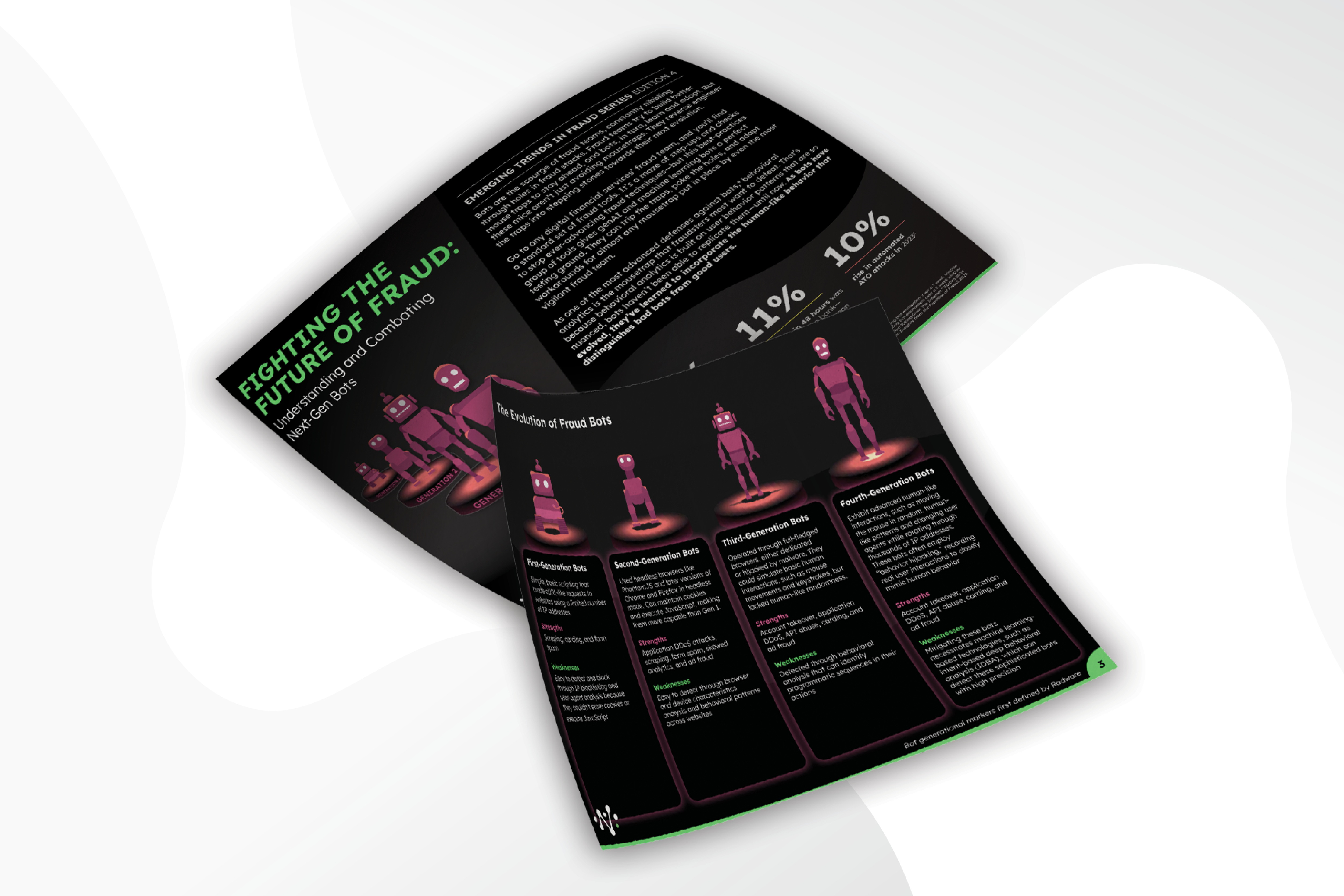
While that’s happening, bots are only advancing. Today’s bots are more human-like than ever, fooling traditional bot detection by cycling through device and network data and replicating human behavior via “behavior hijacking”. Even OpenAI’s new ChatGPT agent shamelessly clicks through bot screening tests and narrates itself proving it’s “not a bot” in real time.
We’ve reached a convergence: businesses have lowered the barrier of entry for users, and bots have grown sophisticated enough to bypass the limited controls that are in place. But there’s still a disconnect within businesses: 72% expect AI-generated fraud to be a top challenge in the year ahead, but 59% still say they’re prioritizing revenue over fraud detection, per Experian’s 2025 U.S. Identity & Fraud Report.
The Real Cost of Bot Traffic
As I mentioned earlier, financial institutions feel the sting of bot fraud in very real terms. Whether it’s fraudulent account openings or account takeovers, the damage is tangible — global losses from bot attacks exceed $100 billion annually. That kind of impact provides a clear ROI for bot detection tools, given they don’t frustrate legitimate users (which, unfortunately, they often do).
But even for companies that don’t feel losses as directly, bots still wreak havoc. They infiltrate ecosystems, degrade user experiences, and distort business metrics. Take social media: bots can easily create accounts, just like humans. But once inside, they spam users, flood timelines with irrelevant, repetitive content, and skew data that advertisers rely on. They actively generate controversy and drive real users away from the platform.
Arguably the biggest challenge is that, at first glance, the influx of bot users looks great. A growing user base is deceptively promising for investors and advertisers. But when does the cost of bot fraud and deteriorating user experiences outweigh the surface-level benefits?
It might be sooner than you think. 57% of consumers are worried about their online activity, but fewer than half believe companies are addressing their concerns. 80% expect action when they report security issues. To meet those expectations — and stay competitive —businesses need to take bot threats seriously before users flock to platforms that do.
Is There an Answer?
Yes, and it doesn’t involve introducing selfies to assess liveliness or requiring documents to verify information. Businesses are right to shy away from exhaustive checks like these: 40% of consumers say they’ve considered abandoning a sign-up due to a poor experience, and 52% actually did, choosing a competitor instead.
Behavioral analytics empowers businesses to stop bots without adding friction for users. It provides passive bot detection that’s capable of identifying today’s advanced, human-like bots without asking more of the real humans trying to do business with you. Companies of all kinds are turning to it as a bot busting solution, and seeing immediate results compared to traditional tools.
To see our bot detection capabilities in action, view a live demo now or read more about how behavioral analytics combats modern bots.